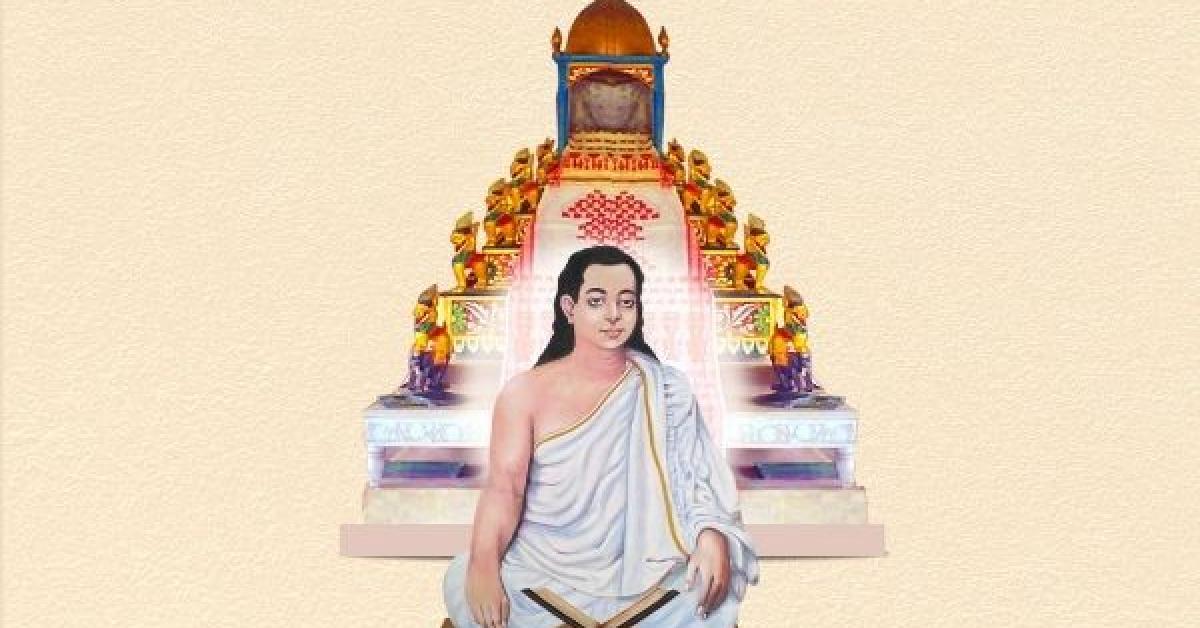
Who Was Srimanta Sankardev?
Srimanta Sankardev was a fifteenth-to-sixteenth century Assamese polymath, saint-scholar, poet, playwright, and social reformer, widely regarded as the father of Assamese culture. Born in 1449 near Bordowa in present-day Nagaon district, Sankardev founded the Ekasarana Dharma, a Neo-Vaishnavite devotional movement that reshaped Assamese religion, art, and society over the following centuries.
Beyond his religious contributions, Sankardev is credited with developing several enduring cultural forms, including Borgeet devotional songs, Sattriya classical dance, and Bhaona theatrical performances, all of which remain central to Assamese cultural identity today. His teachings and literary works, composed in Sanskrit, Assamese, and Brajavali, continue to be studied and performed across Assam’s Sattras, the monastic institutions he helped establish.
What ‘Sankardev Tithi’ Refers To
The term Sankardev Tithi most commonly refers to the Tirubhav Tithi of Srimanta Sankardev, the lunar-calendar-based commemoration of his death anniversary, observed as a regional holiday across Assam. Sankardev is recorded as having died on August 23, 1568, but because the observance follows the Hindu lunar calendar rather than the fixed Gregorian date, the exact Tirubhav Tithi shifts every year, typically falling somewhere in the Bhadra lunar month, which generally corresponds to August or September on the Gregorian calendar.
In recent years, this Tithi has fallen on varying Gregorian dates, including August 29 in 2022, September 17 in 2023, and September 4 in 2024, illustrating just how much the exact date can move from year to year based purely on the lunar tithi calculation rather than any fixed annual date.
Tirubhav Tithi vs Avirbhav Tithi
It’s important to distinguish between two related but separate observances connected to Sankardev’s life. The Tirubhav Tithi, discussed above, marks his death anniversary and is the one most commonly referenced simply as ‘Sankardev Tithi’ in everyday usage, gazetted as an official regional holiday in Assam.
Separately, his Avirbhav Tithi, or birth anniversary, is also observed, generally associated with the Ashwin Shukla Paksha Dasami tithi according to several regional traditions, corresponding to a Gregorian date in the October range depending on the year’s lunar calculations. Different Sattras and communities occasionally follow slightly varying conventions for the exact birth tithi observance, so the specific Gregorian date for the Janmotsav celebration can differ somewhat by source and region.
How the Tithi Is Observed in Assam
Tithi of Srimanta Sankardev is marked with genuine devotion across Assam, particularly within the state’s many Sattras, the monastic centres founded in the tradition Sankardev established. Observances typically include Naam Kirtan (devotional chanting), recitations from his literary and devotional works, cultural performances of Borgeet and Sattriya dance, and community gatherings reflecting on his teachings and legacy.
As a gazetted holiday, government offices, educational institutions, and many private establishments across Assam observe a closure on this date each year, with the Assam state government publishing the exact confirmed date through an official notification closer to the observance, since the precise tithi calculation for that specific year needs to be finalised through the panchang.
Why the Exact Date Requires Yearly Verification
Because Sankardev Tithi is calculated according to the lunar calendar rather than fixed to a specific Gregorian date, anyone planning around this observance for a given year should verify the confirmed date through Assam’s official government holiday notifications or a well-established regional panchang source, rather than assuming it will repeat on the same Gregorian date as a previous year.
This pattern is fairly common across several tithi-based regional and religious observances in India, where the underlying lunar calculation, rather than administrative convenience, determines the exact commemoration date each year, making annual verification an important habit for accurate planning.
Frequently Asked Questions
Why does Sankardev Tithi fall on a different date each year? Because it’s calculated according to a specific lunar tithi within the Bhadra month rather than a fixed Gregorian date, the exact day shifts annually based on how the lunar calendar aligns with the solar year.
Is Sankardev Tithi a public holiday outside Assam? It is specifically a regional holiday within Assam, reflecting Sankardev’s deep and specific cultural significance to the state, rather than a nationally observed holiday across India.
What’s the difference between Sankardev Tithi and Sankardev Janmotsav? Sankardev Tithi generally refers to his Tirubhav Tithi, or death anniversary, while Janmotsav refers to his birth anniversary celebration, observed on a separate tithi later in the lunar calendar.
A Legacy Still Honoured Today
Sankardev Tithi remains one of Assam’s most meaningful cultural and religious observances, honouring a figure whose influence on Assamese language, art, dance, and devotional practice continues to shape the region centuries later. Because the exact date shifts each year according to the lunar calendar, checking official Assam government sources or a trusted regional panchang ahead of time remains the most reliable way to confirm the correct date for any given year.
Sankardev’s Enduring Cultural Footprint
Beyond the specific observance dates, Sankardev’s broader legacy continues to shape everyday cultural life in Assam well beyond the annual Tithi commemoration. Sattriya dance, one of India’s recognised classical dance forms, traces its origins directly to the performance traditions Sankardev established within the Sattra institutions, and continues to be taught, performed, and preserved across Assam and increasingly on national and international stages.
Educational institutions, cultural academies, and government bodies in Assam also regularly organise seminars, exhibitions, and performances throughout the year examining different aspects of Sankardev’s literary, religious, and artistic contributions, reflecting just how deeply his influence continues to be woven into the region’s ongoing cultural identity rather than being confined to a single annual observance.
For those seeking the precise Gregorian date of Sankardev Tithi in any given year, including 2026, checking the Assam state government’s official holiday notifications closer to the Bhadra month remains the most reliable approach, since the exact tithi calculation is typically confirmed and published well ahead of the observance itself.
Given the depth of Sankardev’s historical and cultural significance, many researchers and cultural institutions in Assam continue publishing detailed biographical and literary studies each year around the Tithi observance, offering readers a chance to engage with his legacy well beyond the ritual commemoration itself.