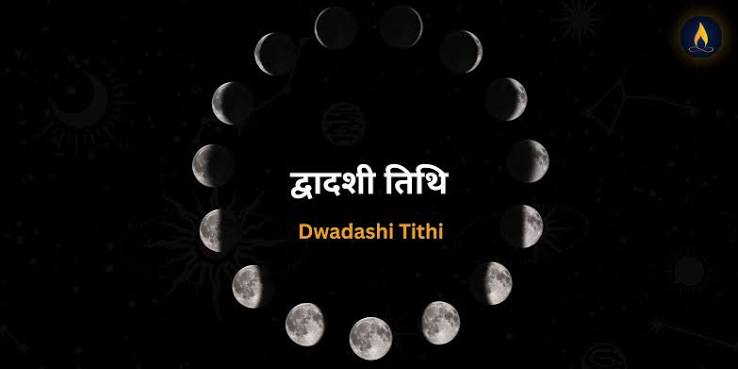
What Is Dwadashi Tithi?
Dwadashi is the twelfth tithi in each fortnight of the Hindu lunar month, occurring twice every month, once in Shukla Paksha (the bright half) and once in Krishna Paksha (the dark half). Like every tithi, it represents a 12-degree segment of the angular distance between the Sun and the Moon, and it directly follows Ekadashi, the eleventh tithi, in the standard 30-tithi sequence of the lunar month.
While Dwadashi doesn’t carry quite the same widespread fame as Ekadashi or Purnima, it holds a genuinely important place in Hindu ritual life, largely because of its close relationship with the Ekadashi fast that comes immediately before it. For millions of devotees who observe Ekadashi vrat, Dwadashi tithi is the day the fast is formally broken, making it just as functionally important as the fasting day itself.
Why Dwadashi Matters So Much to Ekadashi Observers
Traditional Ekadashi fasting doesn’t simply end whenever a person feels like eating again. Hindu ritual practice specifies a precise window called Parana, the act of breaking the fast, which must fall within Dwadashi tithi and, ideally, before a specific portion of that tithi has elapsed. Breaking the fast too early, while Ekadashi is still active, or too late, after Dwadashi has already ended, is generally considered to reduce the spiritual merit of the observance.
This is exactly why any complete Ekadashi guide or panchang listing also specifies the Dwadashi tithi’s start and end time immediately alongside it. Devotees planning a Nirjala, Sampoorna, or Phalahar Ekadashi fast typically check both tithis together rather than looking at Ekadashi in isolation, since the entire ritual cycle spans both days.
Vaikuntha Dwadashi and Other Notable Occurrences
Certain Dwadashi occurrences carry their own dedicated significance beyond simply following an Ekadashi fast. Vaikuntha Ekadashi, one of the most auspicious Ekadashis of the year, falls in the Margashirsha or Pausha month (depending on regional tradition) and is immediately followed by an equally significant Dwadashi, sometimes referred to as Vaikuntha Dwadashi, associated with temple doors symbolically representing the gateway to Vishnu’s abode being opened.
Similarly, Matsya Dwadashi, Pandava Dwadashi, and Shravana Dwadashi are among several named Dwadashi occurrences throughout the year, each tied to specific stories, temple traditions, or regional customs, particularly in Vaishnavite communities across India who place strong emphasis on the Ekadashi-Dwadashi ritual pair as a unit rather than as two separate, unrelated tithis.
How Dwadashi Timing Is Calculated
Like all tithis, Dwadashi is calculated from the angular distance between the Sun and Moon, with the tithi beginning the moment that distance crosses a fresh 12-degree threshold. Because tithi length varies with the Moon’s orbital speed, Dwadashi can last anywhere from around 19 to 26 hours, and its precise start and end time must be checked against a location-specific panchang for accuracy.
For Parana timing specifically, most panchang sources provide a recommended window that avoids both the tail end of Ekadashi and the very final portion of Dwadashi, since certain traditions hold that breaking a fast too close to Dwadashi’s own end reduces its auspiciousness. This is one of the more precise, time-sensitive calculations in the entire panchang system, and serious Ekadashi observers tend to check it carefully rather than estimating.
Dwadashi in the Wider Monthly Cycle
Beyond its Ekadashi connection, Dwadashi simply represents the twelfth stop in the broader 30-tithi journey through each lunar month, sitting between Ekadashi and Trayodashi as the cycle moves steadily toward either Purnima (full moon) or Amavasya (new moon), depending on which paksha is currently active. Understanding where Dwadashi sits in this sequence helps make sense of the overall rhythm of the lunar month.
Some almanacs and temple calendars also list specific Dwadashi Vrat observances independent of Ekadashi, particularly in certain regional and sect-specific traditions, where Dwadashi itself is treated as a minor fasting or worship day in its own right, separate from its usual role as the day an Ekadashi fast concludes.
Frequently Asked Questions
Is it necessary to break an Ekadashi fast specifically on Dwadashi? Yes, according to most traditional guidance, Parana should fall within Dwadashi tithi rather than on Ekadashi itself or after Dwadashi has ended, since the timing is considered part of the observance’s spiritual completeness.
Can Dwadashi and Trayodashi combine for any special observance? Yes, in some traditions Pradosh Vrat, observed on Trayodashi, sometimes overlaps closely with Dwadashi-related customs depending on the specific month and any additional festivals falling nearby, though the two remain distinct tithi observances with their own separate rules.
Does every Ekadashi have an equally significant following Dwadashi? Not every Dwadashi carries a special name or major significance, but the Parana requirement applies to essentially every Ekadashi throughout the year, making Dwadashi a consistently relevant tithi for anyone who observes this fasting practice regularly.
Bringing It All Together
Dwadashi tithi may not always get the spotlight the way Ekadashi or Purnima does, but it plays a quietly essential role in the Hindu ritual calendar, particularly as the tithi during which an Ekadashi fast is properly and auspiciously concluded. For anyone observing Ekadashi regularly, understanding Dwadashi’s timing is just as important as tracking the fasting day itself, and checking both together on a reliable, location-specific panchang remains the most accurate way to follow the full observance correctly.
Dwadashi Across Different Vaishnavite Traditions
Different Vaishnavite communities across India place varying degrees of emphasis on Dwadashi observance. In the ISKCON tradition and among many Gaudiya Vaishnavas, the Ekadashi-Dwadashi pairing is treated with particularly strict attention, with specific guidelines around exactly when Parana should occur relative to sunrise on Dwadashi, often calculated to the minute using detailed almanacs prepared specifically for devotee communities.
In South Indian Vaishnavite traditions, particularly among followers of the Sri Vaishnava sampradaya, certain Dwadashi occurrences carry additional temple-specific rituals, including special abhishekams and processions, especially when the preceding Ekadashi is one of the year’s more significant occurrences like Vaikuntha Ekadashi. These regional variations don’t change the underlying tithi calculation itself, but they do shape how elaborately the day is observed from one community to another.
For anyone who observes Ekadashi regularly, treating Dwadashi as an equally important part of the ritual, rather than an afterthought, is really the difference between a technically completed fast and one observed with full traditional accuracy from start to finish.
Disclaimer: This article is for general informational and educational purposes only, based on traditional Hindu Panchang conventions. Tithi timings can vary slightly by location and calculation method. Please verify exact dates and muhurats with a qualified astrologer or a trusted local panchang before making religious, travel, or financial decisions.