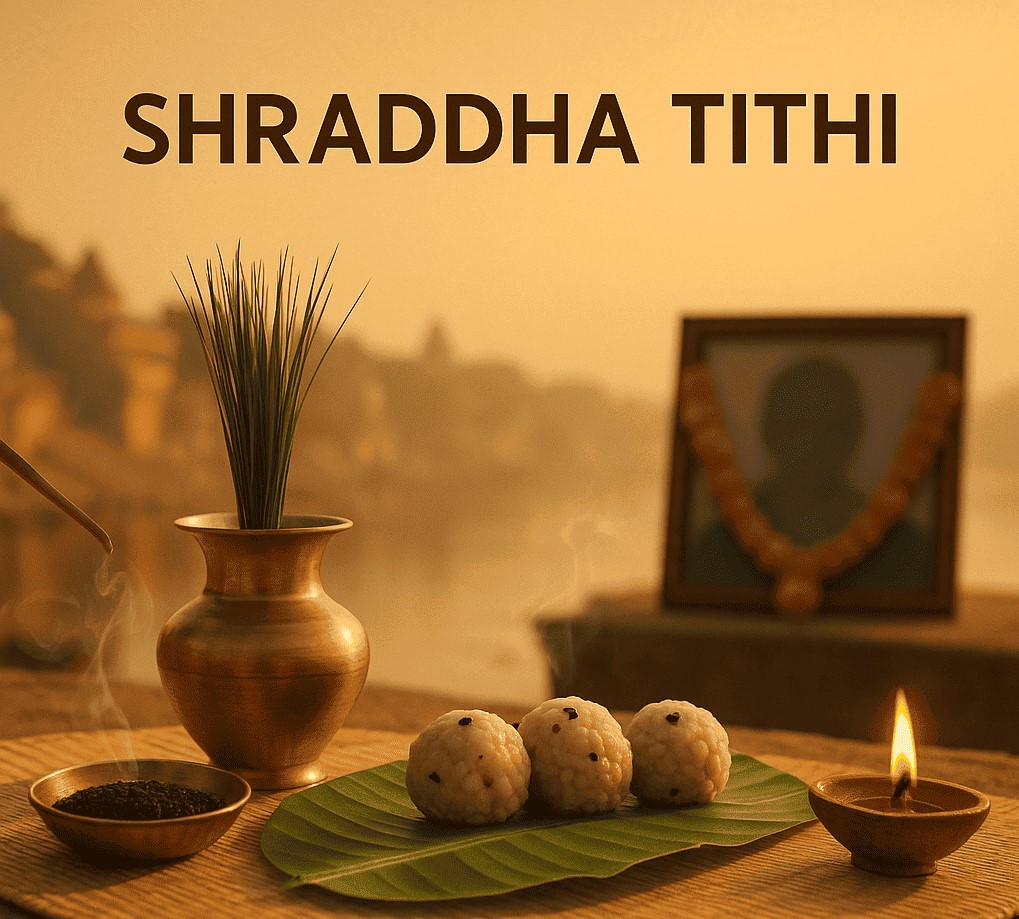
A Shraddha tithi calculator helps Hindu families determine the precise lunar day on which to perform Shraddha, the traditional rite honoring deceased ancestors. Because Shraddha is meant to be performed on the same tithi as the ancestor’s passing, rather than the same solar calendar date, calculating the correct tithi each year requires accurate lunar calendar tools rather than simply noting an anniversary date.
What Is Shraddha and Why Tithi Matters
Shraddha is a Hindu ritual performed to honor and pay respects to deceased ancestors, typically involving prayers, offerings of food, and rites performed by family members, most often the eldest son or closest male relative. Unlike a birthday or Western-style death anniversary, Shraddha is traditionally observed according to the lunar tithi on which the ancestor passed away, not the fixed solar date, which means the corresponding Gregorian calendar date shifts slightly from year to year.
How a Shraddha Tithi Calculator Works
A Shraddha tithi calculator takes the original date of death, converts it into its corresponding Hindu lunar tithi and paksha, and then determines the next occurrence of that same tithi in the current or upcoming lunar year. Because tithis can occasionally repeat or be skipped within a solar year due to the mismatch between lunar and solar cycles, accurate calculation requires proper Panchang data rather than a simple date conversion.
Pitru Paksha and Its Special Significance
Pitru Paksha, a sixteen-day period in the Hindu calendar dedicated specifically to ancestor worship, is considered an especially important time to perform Shraddha rites. Falling in the Krishna Paksha of the month of Ashwin, each day within Pitru Paksha corresponds to a specific tithi, and families typically perform Shraddha on the day matching their ancestor’s tithi of passing during this window, even if they also observe it at other points during the year.
Determining Your Family’s Correct Shraddha Tithi
To find the correct tithi, families typically start with the original solar calendar date of an ancestor’s passing and consult a Panchang or priest to identify which tithi was active at that time. Once the original tithi is known, a Shraddha tithi calculator or annual Panchang can be used each year to identify the next matching date, which is essential since the same tithi rarely falls on the identical solar calendar date twice in a row.
Tarpan and Related Rituals
Alongside Shraddha, many families also perform Tarpan, a water-offering ritual to ancestors, which follows similar tithi-based timing rules. Both rituals are traditionally performed in the morning hours, with specific guidance on timing often provided by a family priest based on the exact tithi calculation for that year.
Using Online Tools for Accuracy
Hindu families in the United States and elsewhere in the diaspora increasingly rely on online Shraddha tithi calculators to determine the correct annual date without needing direct access to a traditional priest for the calculation itself. These tools typically require entering the original date of death along with a location, and they return the corresponding tithi along with the projected date for the current year, factoring in local sunrise times for accuracy.
Frequently Asked Questions
Why isn’t Shraddha performed on the same solar calendar date every year? Because Shraddha follows the lunar tithi of an ancestor’s passing rather than the fixed solar date, and lunar tithis shift relative to the solar calendar each year, the corresponding Gregorian date changes annually. What if I don’t know the exact tithi of an ancestor’s passing? A priest or Panchang expert can typically convert a known solar calendar date of death into its corresponding lunar tithi, which can then be used for all future annual calculations. Is Pitru Paksha the only time Shraddha can be performed? No, while Pitru Paksha is considered especially significant, Shraddha can also be performed annually on the matching tithi outside of this specific period.
The Bottom Line
A Shraddha tithi calculator serves an important practical function for Hindu families seeking to honor ancestors correctly according to tradition, converting a fixed date of passing into the shifting lunar calendar system used for these rites. As more families move abroad and lose regular access to traditional priests for these calculations, reliable digital tools have become an increasingly valuable resource for maintaining this important cultural and spiritual practice across generations.