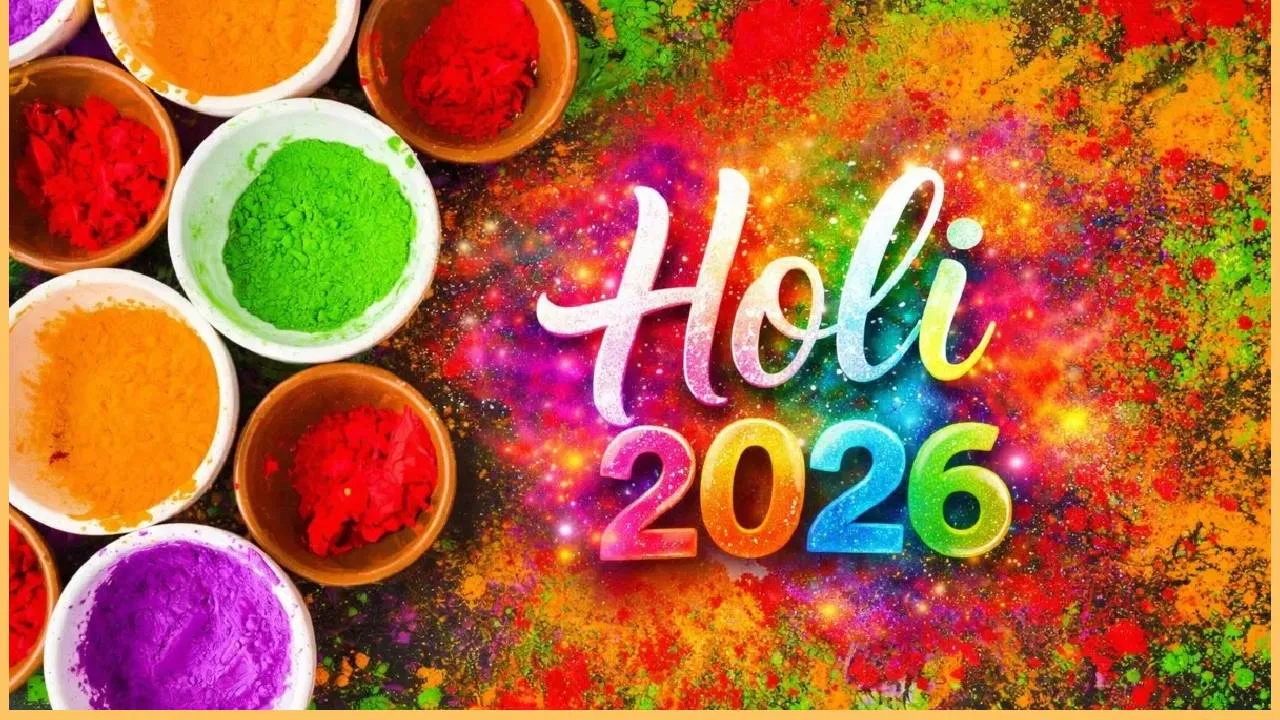
Holi, India’s vibrant Festival of Colours, is one of the most eagerly anticipated celebrations on the Hindu calendar, and its 2026 dates have now been confirmed based on the Phalguna Purnima (full moon) timing.
Holi 2026 Date: The Confirmed Schedule
Holi 2026 will be celebrated across two main days:
- Holika Dahan (Chhoti Holi): Tuesday, 3 March 2026, observed after sunset
- Rangwali Holi / Dhulandi (the main Festival of Colours): Wednesday, 4 March 2026, from morning onward
These dates are based on Purnima Tithi, the full moon day in the Hindu lunar calendar, falling in the month of Phalguna. All timings are calculated according to local time in New Delhi, and the Panchang day begins and ends with sunrise, which is why Holika Dahan falls on the evening before the main colour celebration.
Why Holi’s Date Shifts Every Year
Holi is timed around the full moon in the Hindu month of Phalguna, which typically falls in late February or early March depending on the lunar cycle. Because the Hindu calendar is based on lunar months rather than the fixed Gregorian calendar, the exact date shifts from year to year. For readers outside India, it’s worth noting that Holi dates are determined according to Indian local time, not local time zones elsewhere, so the festival is observed based on when the Purnima tithi and sunset align in India, regardless of when the full moon technically occurs in other parts of the world.
A Rare Astronomical Note For 2026
Some sources have flagged that Holi 2026 coincides with a Total Lunar Eclipse occurring on Phalguna Purnima, a rare cosmic overlap that has led to some regional variation in the exact Holika Dahan timing, with certain traditions observing it on 2 March instead of 3 March depending on local eclipse-related considerations. Because of this, some regions may observe Holika Dahan a day earlier or the main Rangwali Holi a day later than the primary dates listed above. Readers should check their local panchang or regional temple guidance for the precise timing followed in their specific area.
The Story Behind Holi
Holi’s origins trace back to Hindu mythology, most notably the story of Prahlad and Holika. According to the legend, the demon king Hiranyakashipu, angered by his son Prahlad’s unwavering devotion to Lord Vishnu, enlisted his sister Holika to kill the boy by sitting with him on a funeral pyre, since Holika was believed to be immune to fire. However, Prahlad’s devotion protected him, and Holika perished in the flames instead. This story is commemorated through Holika Dahan, the ritual bonfire lit the evening before the main festival, symbolizing the victory of devotion and good over evil.
The second day, Rangwali Holi, draws from a different legend connected to Lord Krishna and Radha. As the story goes, a young Krishna was self-conscious about his blue-hued skin compared to Radha’s fair complexion, so he playfully smeared colour on her face and those of the village girls, a mischievous act that is said to have inspired the tradition of playing with coloured powders that defines the festival today.
How Holi Is Celebrated
Holi celebrations typically unfold across the two-day period:
- Holika Dahan — communities gather around bonfires on the evening of 3 March 2026, performing prayers and rituals symbolizing the burning away of negativity and evil, mirroring the destruction of the demoness Holika
- Rangwali Holi (Dhulandi) — on 4 March 2026, people of all ages take to the streets, throwing colored powders (gulal) and water at one another, dancing to festive music, and sharing traditional sweets and delicacies
The festival is considered the second-biggest celebration on the Hindu calendar after Diwali, and while it is primarily a Hindu religious festival, its spirit of joy, renewal, and community has made it popular well beyond religious boundaries, with celebrations now held in cities around the world, from London to New York.
Best Places To Celebrate Holi In India
Certain regions of India are particularly famous for their Holi celebrations:
- Mathura and Vrindavan — considered the spiritual heartland of Holi, since these are the places associated with the life of Lord Krishna, and celebrations here often extend across several days
- Barsana — home to the famous Lathmar Holi, a unique tradition where women playfully “beat” men with sticks, a ritual rooted in local Krishna-Radha folklore
- Jaipur — known for royal, culturally rich Holi celebrations often featuring traditional Rajasthani music and dance
- Pushkar — popular for a lively, festival-atmosphere Holi celebration that draws both domestic and international visitors
Frequently Asked Questions
What is the Holi 2026 date?
Holika Dahan falls on 3 March 2026, and the main Rangwali Holi (Festival of Colours) falls on 4 March 2026.
Why does the Holi date change every year?
Holi is determined by the Hindu lunar calendar and falls on Phalguna Purnima, the full moon day, which shifts against the fixed Gregorian calendar from year to year.
Is there any special astronomical event during Holi 2026?
Yes, a Total Lunar Eclipse coincides with Phalguna Purnima in 2026, which has led to some regional variation in Holika Dahan timing.
Where are the best places to celebrate Holi in India?
Mathura, Vrindavan, and Barsana in the Braj region are considered the most iconic destinations, alongside popular celebrations in Jaipur and Pushkar.
Disclaimer: Festival dates are based on traditional panchang calculations and public reporting. Exact regional timings may vary; please consult a local panchang for precise observance in your area.