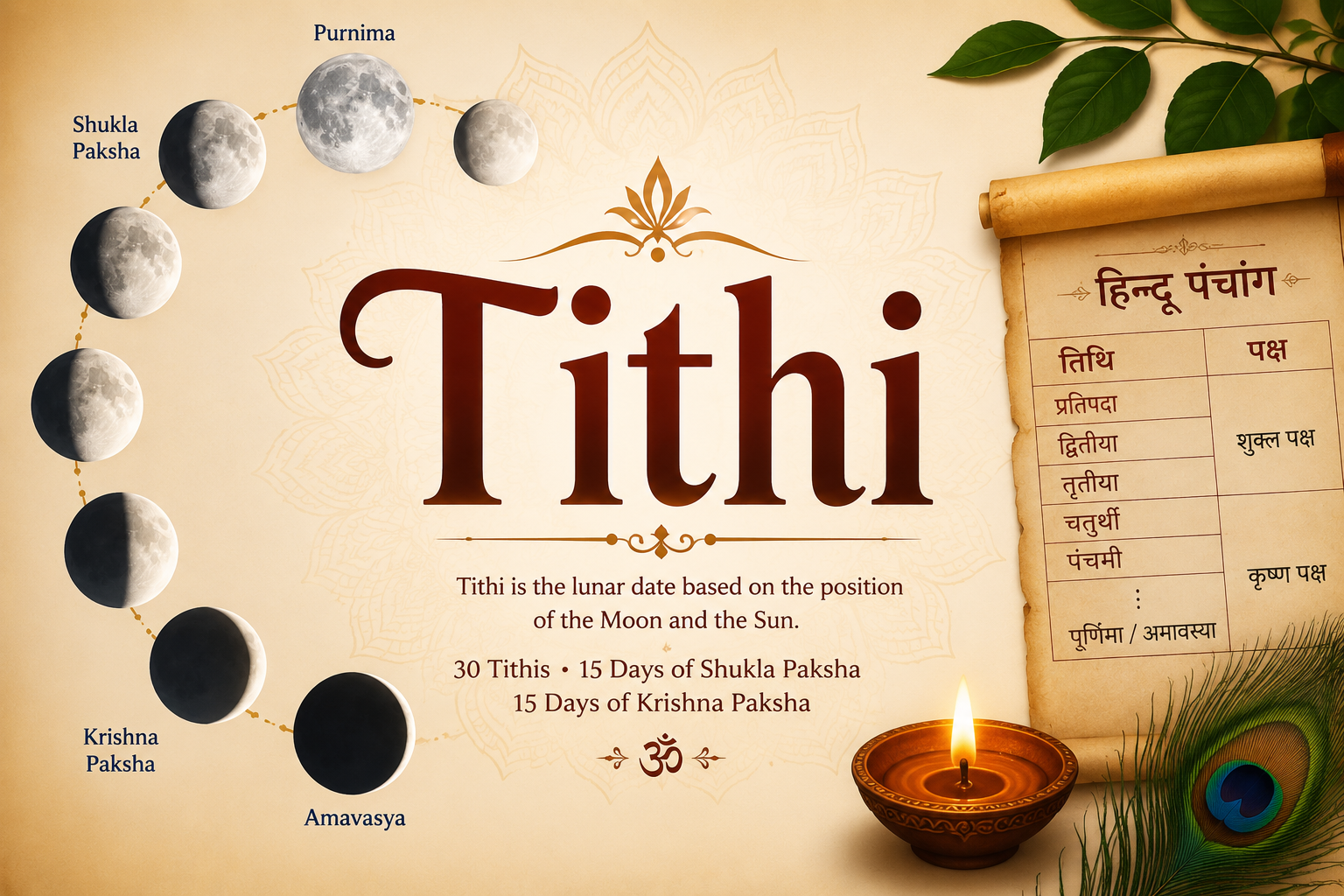
Why People Check Tomorrow’s Tithi in Advance
Checking tomorrow tithi ahead of time is common practice for anyone who needs to prepare for a fast, pooja, or auspicious activity the following day. Ekadashi fasting, for instance, often requires preparation the evening before, such as finishing meals earlier or avoiding certain foods, which means knowing tomorrow’s tithi in advance is far more useful than only discovering it the next morning.
Similarly, people planning weddings, griha pravesh ceremonies, or important purchases frequently check several days of upcoming tithi at once to identify the most favourable date within a short window, rather than checking just one day at a time.
How Tithi Carries Over From Today to Tomorrow
Since a tithi doesn’t reset at midnight, today’s tithi often continues into part of tomorrow before the next one begins. This means tomorrow tithi isn’t always a clean, fresh day; it frequently starts as a continuation of today’s tithi for a few hours before transitioning to the next one, sometimes not until well into the morning or afternoon.
A typical panchang forecast might show something like: ‘Tomorrow: Dashami up to 2:15 PM, then Ekadashi begins.’ This detail is especially important for anyone whose ritual depends on which tithi is active specifically at sunrise the next day, since that’s usually the tithi considered to govern the whole day traditionally.
Where to Find Reliable Next-Day Tithi Information
Most established panchang websites and apps offer a simple ‘Tomorrow’ toggle right next to the ‘Today’ panchang view, making it easy to jump ahead by a single day without navigating through a full monthly calendar. This is usually the fastest way to check tomorrow tithi accurately, especially since these tools already account for your selected city’s local sunrise time.
For planning further ahead, a monthly panchang view or a printed Hindu calendar with daily tithi listings works better than checking one day at a time, particularly for identifying multiple upcoming Ekadashi or Pradosh dates in a single glance.
Common Situations Where This Matters Most
Beyond religious fasting, tomorrow tithi is frequently checked before starting new ventures, signing contracts, booking travel, or making significant purchases like gold or property, all of which are traditionally guided by auspicious tithi selection in many households. Wedding planning in particular often involves checking tithi weeks or months ahead to shortlist favourable dates before finalising a muhurat.
New parents also sometimes check tithi around a baby’s birth date to later calculate janm tithi, the lunar birthday that many families use for naming ceremonies and annual birthday observances instead of, or alongside, the Gregorian date.
A Simple Habit Worth Building
Checking tomorrow tithi alongside today’s reading takes only a few extra seconds but removes the last-minute scramble of realising a fasting day or important ritual is approaching. Once this becomes a regular habit, planning around the Hindu lunar calendar feels far less complicated and much more predictable.
Frequently Asked Questions
How far in advance can I reliably check tithi? Most panchang platforms can calculate tithi accurately for the entire current year and often several years ahead, since the underlying astronomical calculations are well established, though very long-range predictions can carry tiny margins of adjustment as more precise data becomes available.
Is tomorrow tithi always different from today’s? Not always — if today’s tithi has a long duration and extends past the next sunrise, tomorrow’s tithi might actually be the same one you’re currently observing, simply continuing into its final hours before switching to the next tithi later in the day.
Planning a Full Week Ahead
Beyond just checking tomorrow tithi, many people find it useful to glance at a full week’s worth of upcoming tithi at once, particularly when trying to schedule something like a housewarming, engagement, or business launch within a specific window. Most panchang apps offer a simple weekly or monthly view for exactly this purpose.
This kind of forward planning is especially valuable around recurring fasting days, since knowing several Ekadashi or Pradosh dates in advance lets you plan meals, travel, and social commitments around them comfortably, rather than realising a fasting day has arrived only the night before.
It’s also worth building a small buffer into your planning rather than relying purely on tomorrow tithi at the last minute. For anything requiring preparation, like grocery shopping for a fasting day or arranging a priest for a pooja, checking two to three days ahead rather than just one gives enough lead time to handle any last-minute adjustments comfortably, especially around busier festival periods when priests and venues can get booked quickly.
In the end, a few seconds spent checking tomorrow tithi consistently adds up to a much smoother year of festival planning, fasting observance, and auspicious scheduling than trying to catch up after the fact.
This small habit of checking a day or two ahead, rather than only on the day itself, tends to make the biggest practical difference for anyone actively following a Hindu lunar calendar in daily life.