Thithi Meaning in Simple Terms
Thithi is the Sanskrit term for a lunar day in the Hindu calendar system. Instead of measuring a day by the Earth’s rotation like the Gregorian calendar does, a thithi measures the time it takes for the angular distance between the Sun and Moon, as seen from Earth, to increase by 12 degrees. This distance-based approach means the length of a thithi is naturally variable, unlike a fixed 24-hour solar day.
This concept forms the very first and arguably most important element of the panchang, the traditional five-limbed almanac used across India for religious, agricultural, and social planning. The other four elements are Vaar (weekday), Nakshatra (lunar constellation), Yoga (a luni-solar combination), and Karana (half of a tithi).
The 30 Tithis, One Full Lunar Month
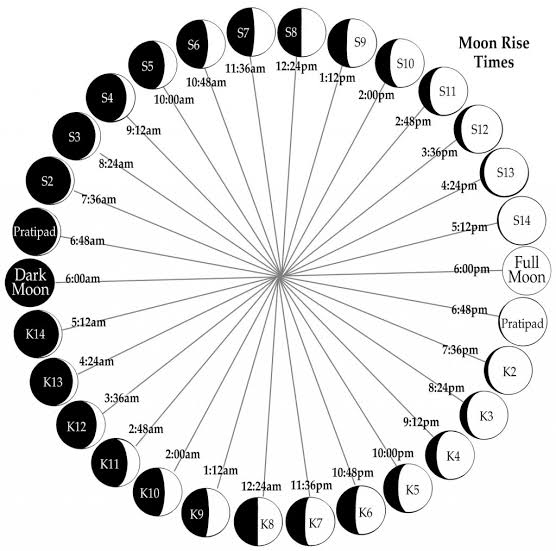
A complete lunar month contains exactly 30 tithis, divided into two equal halves. The Shukla Paksha, or bright fortnight, runs from the day after Amavasya (new moon) through to Purnima (full moon), during which moonlight increases night by night. The Krishna Paksha, or dark fortnight, then runs from the day after Purnima back to Amavasya, as moonlight fades again.
Both fortnights use the same fifteen names in sequence: Pratipada, Dwitiya, Tritiya, Chaturthi, Panchami, Shashthi, Saptami, Ashtami, Navami, Dashami, Ekadashi, Dwadashi, Trayodashi, Chaturdashi, and the final day, which is named Purnima in the bright fortnight and Amavasya in the dark fortnight.
How a Thithi Is Actually Calculated
Traditional Hindu astronomy calculates thithi using the difference between the Moon’s celestial longitude and the Sun’s celestial longitude, dividing that difference by 12 degrees. Modern panchang calculation, known as the Drik method, uses precise astronomical ephemeris data rather than older approximate mathematical models, so the tithi timings you see on trusted panchang platforms today reflect the moon’s real position in the sky.
Because the Moon’s orbital speed changes throughout the month, a tithi can last anywhere from roughly 19 hours to just under 26 hours. This is why the same Gregorian date can sometimes carry two tithis, one ending during the day and the next beginning immediately after.
Why Thithi Matters Beyond Astrology
Almost every major Hindu festival is fixed to a specific tithi rather than a specific Gregorian date, which is why festivals like Diwali, Holi, Raksha Bandhan, and Janmashtami fall on different English calendar dates each year. Fasting days such as Ekadashi and Pradosh Vrat are also determined purely by tithi. Auspicious ceremonies, including weddings, griha pravesh, and business launches, are frequently scheduled after checking which tithi is considered favourable for that specific activity.
Beyond religious use, thithi has practical roots in agriculture too, since many traditional farming and harvest-related customs across India historically followed the lunar cycle rather than the solar one.
Special or ‘Tithi Kshaya’ Situations
Occasionally, a tithi begins and ends between two sunrises without ever being present at sunrise itself. This rare situation is called tithi kshaya, and traditional panchang rules provide specific guidance on how festivals should be observed in such years. It’s one of the more advanced aspects of panchang reading, but it explains why festival dates can occasionally look unusual compared to a simple 30-day rotation.
Understanding thithi is really the starting point for reading any Hindu panchang confidently. Once you know how the lunar day cycle works, checking today’s tithi, planning a fast, or understanding why a festival falls on a particular date all become much easier to follow.
Frequently Asked Questions About Thithi
How many tithis are there in total? There are 30 tithis in a complete lunar month, 15 in Shukla Paksha and 15 in Krishna Paksha, though the same 15 names repeat in both halves with only the final day differing (Purnima versus Amavasya).
Why doesn’t a tithi last exactly 24 hours? Because the Moon’s orbital speed around Earth isn’t constant, the time it takes to move 12 degrees away from the Sun varies slightly throughout the month, resulting in tithis of different lengths, typically between 19 and 26 hours.
Is tithi the same as a nakshatra? No. Tithi is based on the angular distance between the Sun and Moon, while nakshatra refers to which of the 27 lunar constellations the Moon is passing through. Both are separate elements of the panchang used for different purposes.
Common Misconceptions About Tithi
A frequent misconception is that tithi and the Gregorian date are simply two labels for the same thing, just in different languages or numbering systems. In reality, they are calculated from entirely different principles, one from Earth’s rotation and one from the Moon’s angular position, which is exactly why festival dates shift every year rather than staying fixed.
Another common misunderstanding is assuming that a tithi always lasts a full calendar day. As covered earlier, tithi length varies between roughly 19 and 26 hours depending on the Moon’s orbital speed, meaning a single Gregorian date can sometimes contain the tail end of one tithi and the beginning of the next, a detail that trips up many casual panchang readers.