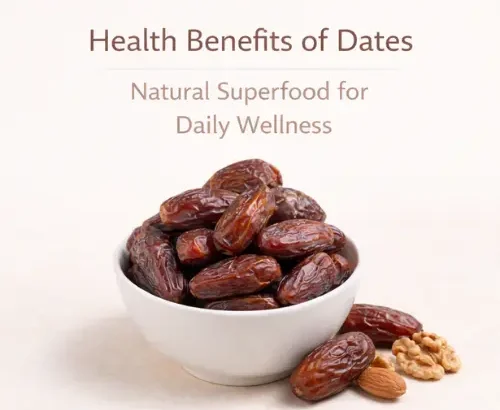
Pitted dates are dates with the hard central seed removed, making them a convenient, ready-to-eat option for snacking, baking, and cooking. Naturally sweet and rich in fiber, potassium, and antioxidants, pitted dates have become a popular whole-food sugar substitute and everyday snack for health-conscious consumers looking for a nutrient-dense alternative to processed treats.
What Are Pitted Dates?
Dates are the fruit of the date palm tree, traditionally grown across the Middle East and North Africa, and are naturally sold with a hard, inedible pit at their center. Pitted dates have had this pit removed during processing, making them easier and safer to eat directly, blend into smoothies, or use as a filling in recipes without the risk of biting into the hard seed.
Nutritional Profile
A typical serving of pitted dates, about 100 grams or roughly 3 to 4 dates, provides approximately 270 to 280 calories, 7 grams of fiber, and significant amounts of potassium, magnesium, and B vitamins. Despite their natural sweetness, dates also contain beneficial plant compounds including antioxidants like flavonoids and phenolic acid, which have been linked to reduced inflammation in various studies.
Health Benefits of Eating Dates
The high fiber content in dates supports digestive health and can help promote feelings of fullness, making them a popular snack for people managing their weight or blood sugar despite their natural sugar content. Dates are also commonly recommended as a natural source of energy before or after exercise, and some research suggests their potassium content may support healthy blood pressure levels as part of a balanced diet.
Medjool vs. Deglet Noor: Common Pitted Date Varieties
Medjool dates are the most widely recognized variety in the pitted dates market, known for their large size, soft texture, and rich caramel-like flavor, making them popular for snacking and baking. Deglet Noor dates, by contrast, are smaller, firmer, and less sweet, often used in cooking and commercial food production where a more subtle date flavor is preferred.
Culinary Uses for Pitted Dates
Because the pit has already been removed, pitted dates are especially convenient for recipes like energy balls, homemade granola bars, and smoothies, where they can be blended smoothly without concern for hidden seeds. They’re also commonly stuffed with nut butter, cheese, or nuts as a quick snack, or chopped and added to salads, oatmeal, and baked goods as a natural sweetener alternative to refined sugar, offering both texture and flavor to a wide range of dishes.
Frequently Asked Questions
Are pitted dates healthier than dates with pits? Nutritionally, pitted and unpitted dates are identical; the only difference is the convenience of not having to remove the pit yourself before eating. How should pitted dates be stored? Pitted dates keep well in an airtight container in a cool, dry place for several weeks, or in the refrigerator for several months to extend freshness. Are dates a good sugar substitute? Because of their natural sweetness and fiber content, dates are often used as a whole-food alternative to refined sugar in recipes, though they should still be consumed in moderation due to their calorie and sugar content.
The Bottom Line
Pitted dates offer a convenient way to enjoy the natural sweetness and nutritional benefits of this ancient fruit without the hassle of removing a hard central seed. Whether eaten on their own as a snack, blended into smoothies, or used as a natural sweetener in recipes, pitted dates remain a versatile, nutrient-dense addition to a balanced diet that fits easily into both sweet and savory dishes throughout the day.